 Daniel Kitchen
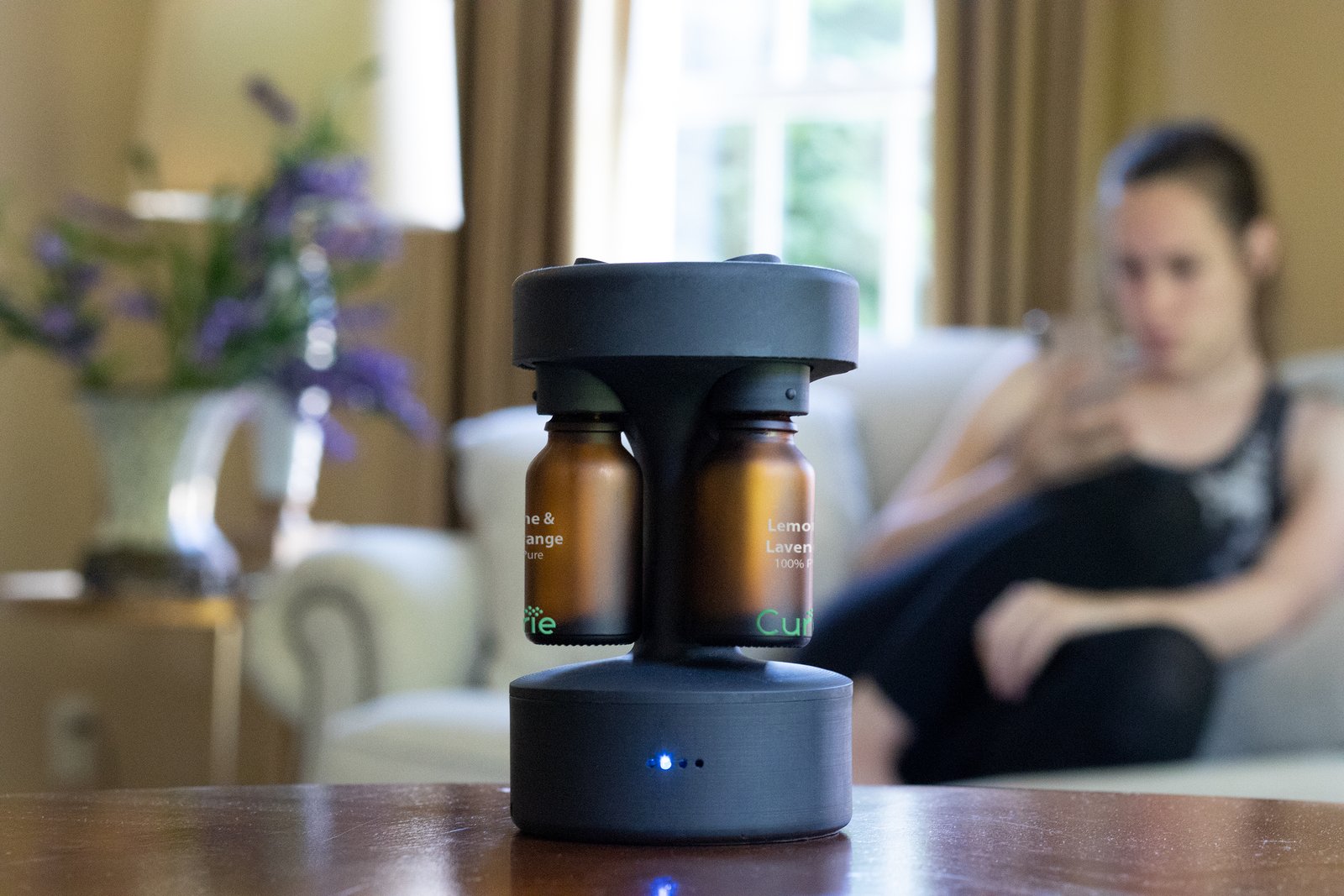
Curie.
Curie — a pure demonstration of what an essential-oil diffuser becomes when you design out every inconvenience and make full integration the whole point, not a feature bolted on afterward.
Curie is a pure demonstration of what's possible when you completely eliminate every inconvenience of an essential-oil diffuser and fully integrate the technology underneath it — not as an added feature, but as the fundamental, non-negotiable principle the whole product is built around. Three oils run at once, each on its own schedule and its own intensity, with no compromise between them — because the hardware, the firmware, and the app were never separate things to reconcile. They were one system from the first sketch.
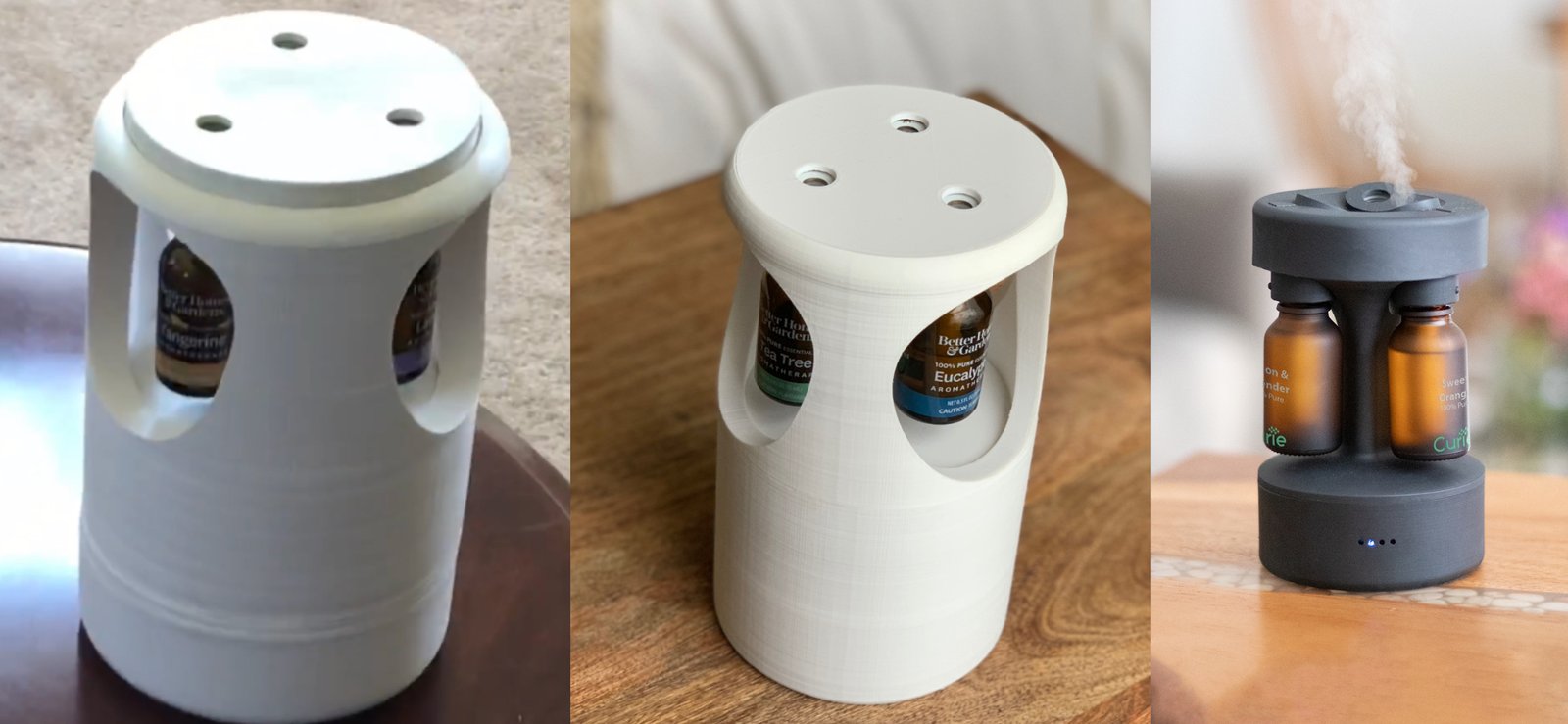
Three generations.
The first print, on the left, was a rough PLA shell with a piezoelectric transducer bolted in — just enough to prove the mist concept worked in the form factor I wanted. The second generation refined the geometry, the airflow path, and the internal layout until the thing could actually be serviced.
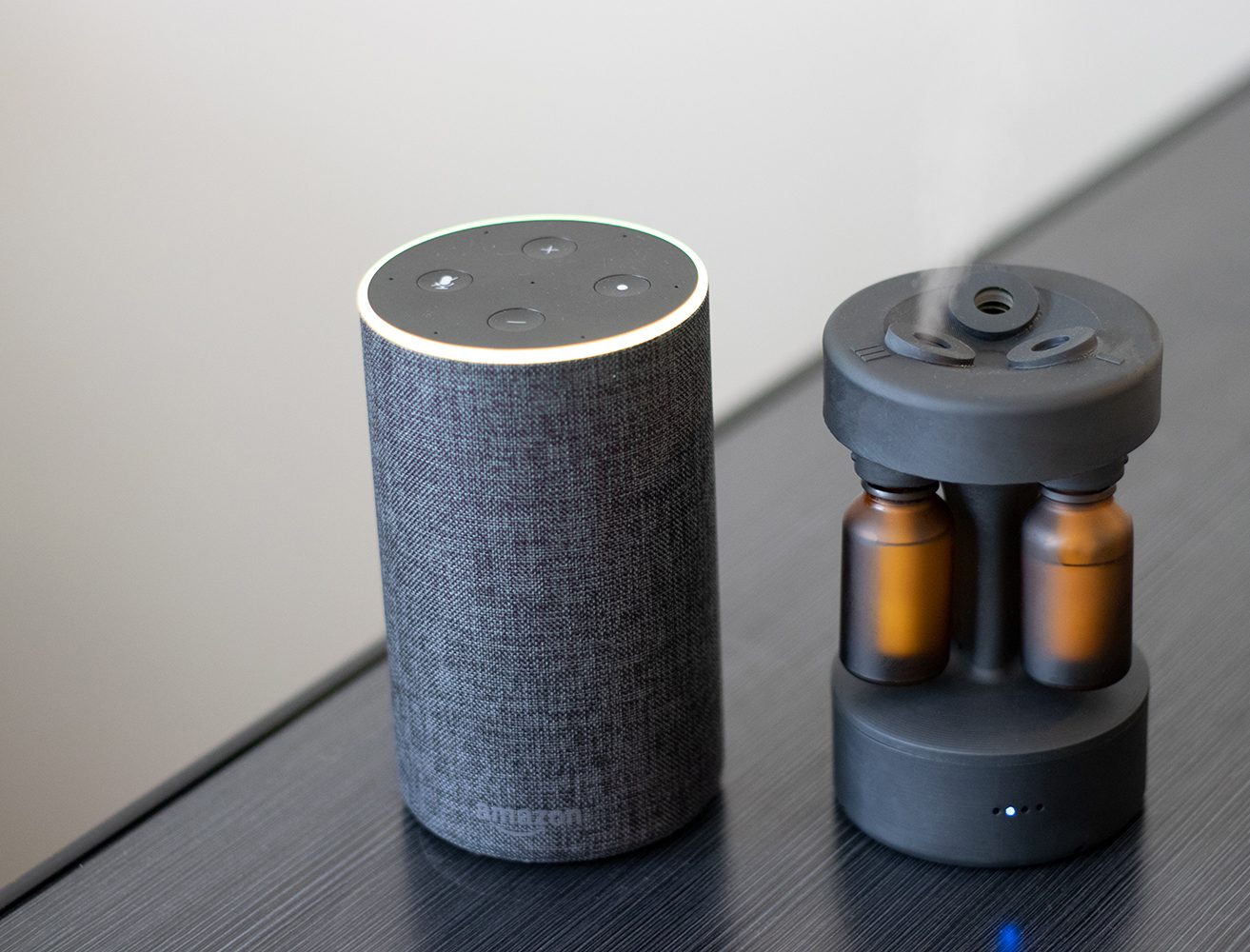
The third, in matte black, is the unit that shipped: SLA-printed housing, amber-glass quick-connect bottles, a custom PCB built into a form that finally looked like a finished product rather than a prototype. The plume above it is the device running.
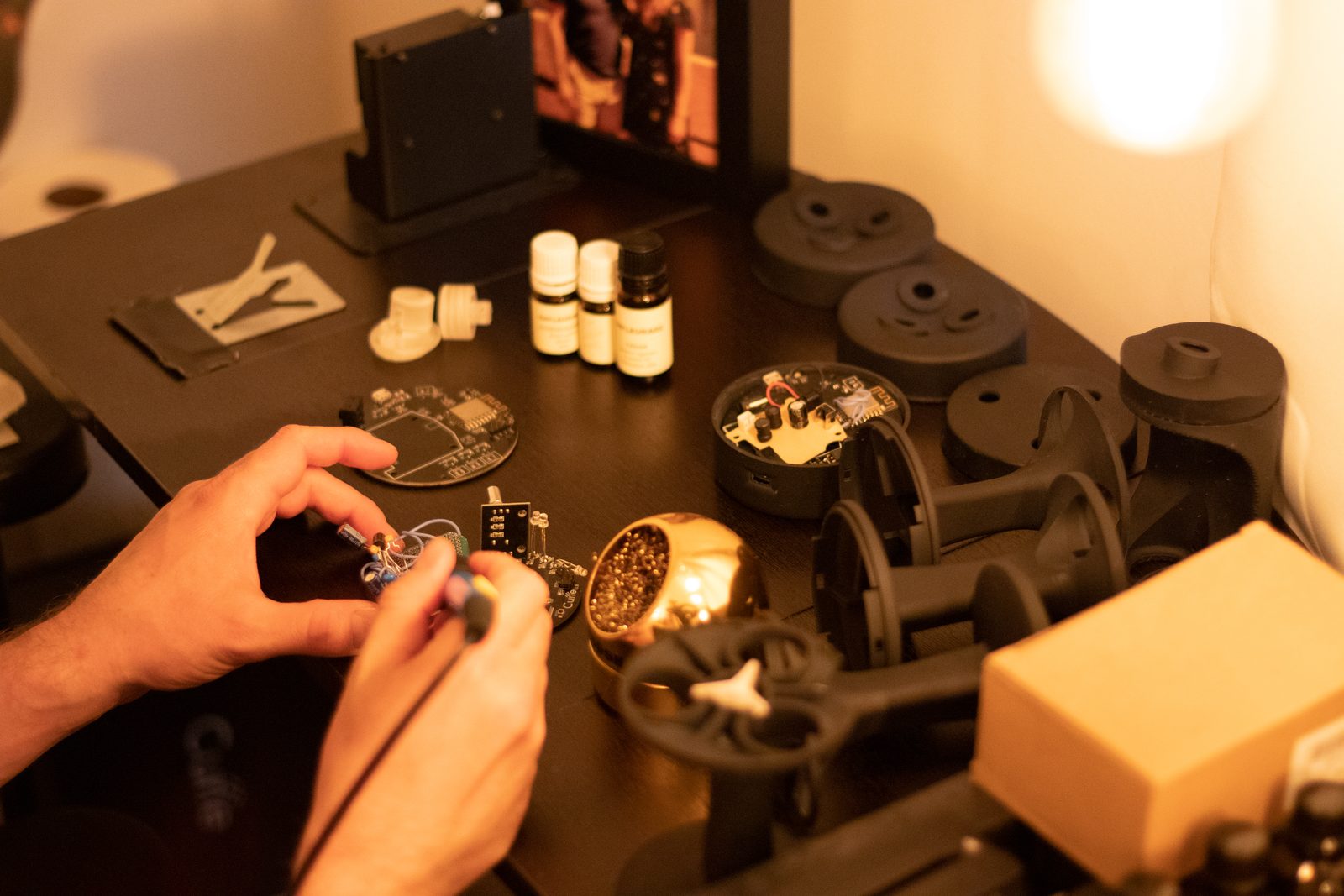
Hardware, firmware, app.
The PCB was laid out in Eagle by a contracted electrical engineer, built against requirements I specified down to the rotary-encoder input, the four-LED status feedback, the piezoelectric driver circuit, the WiFi for app control. The silkscreen on that round board reads "Curie."
Firmware was written in Arduino by a contracted programmer, against a pin-map and behavior spec I drafted myself: timer-driven piezo pulses across four intensity levels, a click-based UI, status feedback that actually told you what the device was doing. The mechanical design — housing, bottle retention, mist path, base — was entirely mine, worked out in Shapr3D.
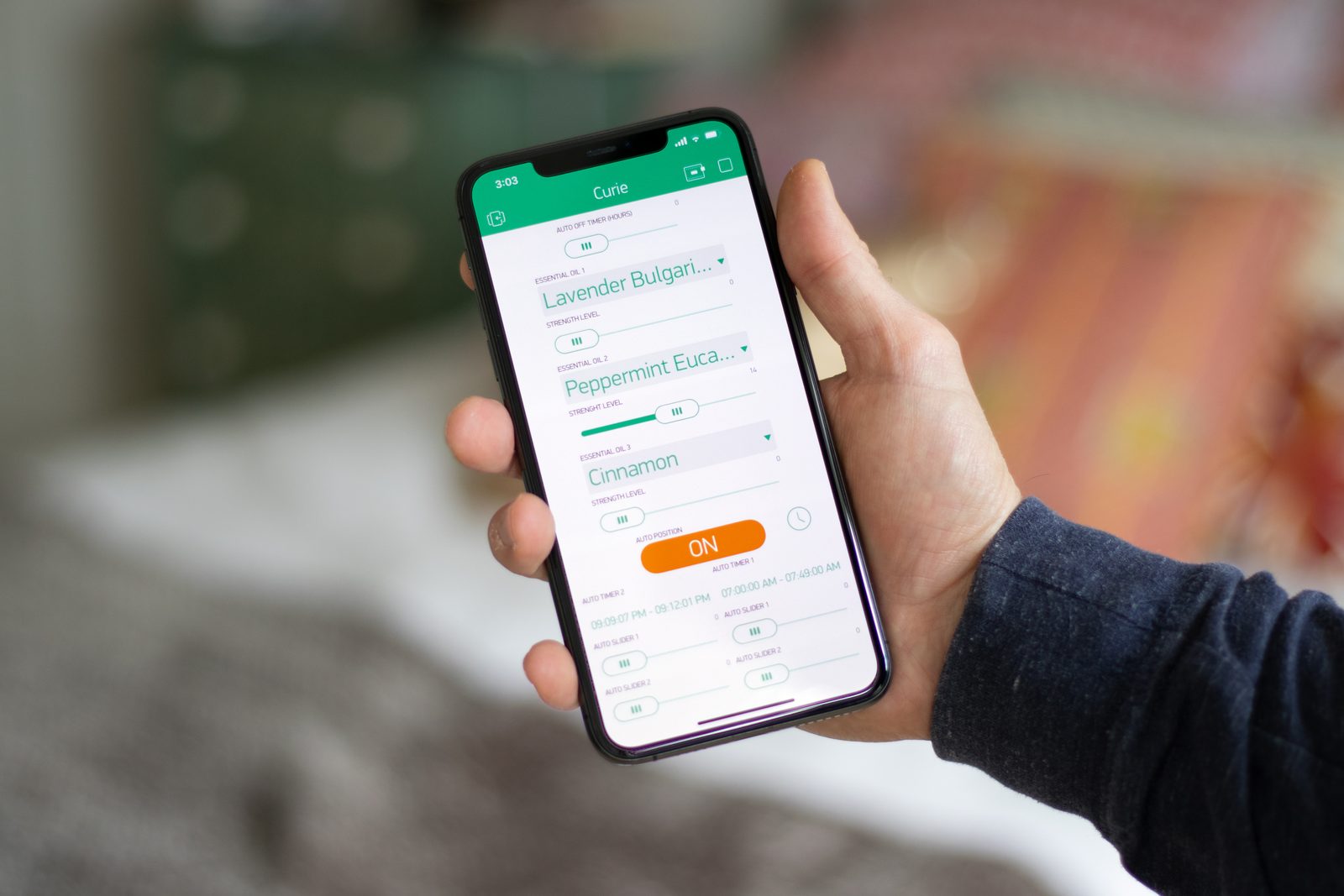
Three oils, independently scheduled.
The iOS app gives each bottle slot its own strength slider and its own auto-timer schedule, so multiple oils can run at once, each at its own intensity, with no compromise between them. Hardware, firmware, and app were built in parallel and integrated iteratively the whole way through — a change to the firmware behavior spec usually meant a matching change in the app inside the same week.
A real product, in real homes.
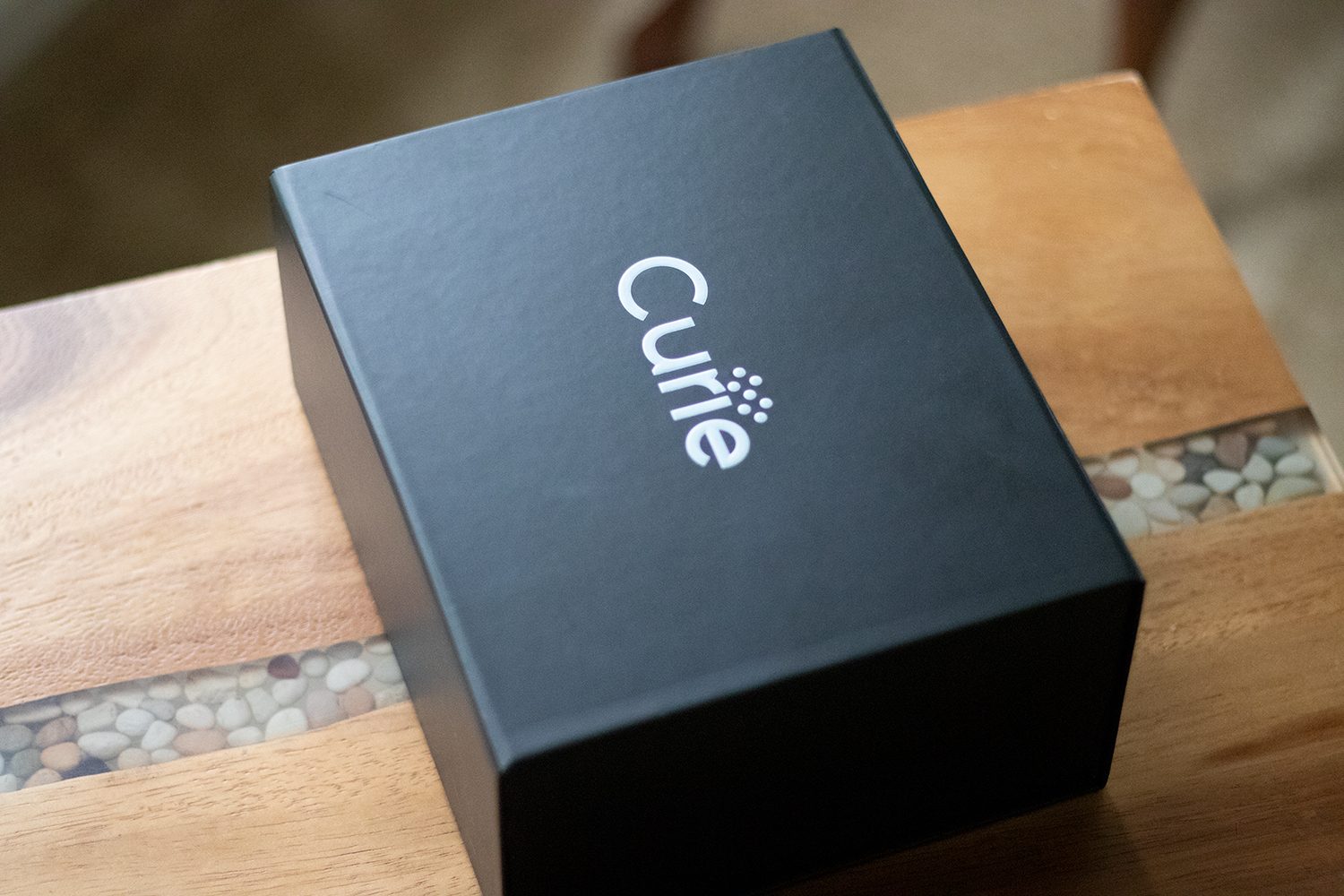
Curie went out in retail-grade packaging and held its own on the same shelves as the smart-home gear people already owned — shown here next to an Echo for scale. The manufacturing coordination, the assembly, the packaging, the fulfillment — all of it, one build.
It crossed the gap that actually matters: from an idea in a notebook to a real, fully integrated product, built and shipped and running in someone's home.
Curie is the clearest proof I have of the shape of work I do now: take on a hard technical problem, write the spec myself, coordinate outside contractors directly with nothing between us, and deliver a real product at the end of it. The technology changed — it's LLMs and agents today. The shape of the work never has.